
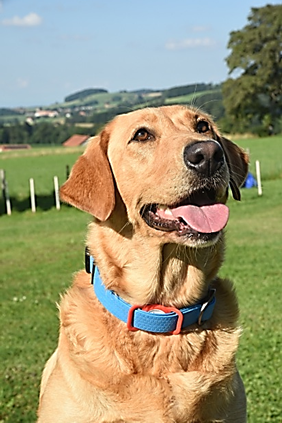
Fipronil is an insecticide used on pets as a tick repellent. In Switzerland, recent analyses show it is being found in some watercourses and is a threat to aquatic wildlife.
Fipronil: a tick repellent for pets with hidden effects
Swiss institutes specialising in water and ecotoxicology report that fipronil is appearing in rivers at concentrations of concern for aquatic organisms, posing a high risk to aquatic wildlife.
The measurements taken within the framework of the national river monitoring programme (NAWA TREND MV) show that the EQCo (European Quality Criterion chronic ecotoxicological) value
is found in many watercourses. Fipronil therefore poses a risk to aquatic organisms.
Over the measurement year 2022, no other pesticide resulted in more exceedances of the MRL than fipronil.
The discharges occur mainly through domestic wastewater, after contact with treated animals, washing of textiles, or bathing.
Fipronil has been banned in Switzerland as a plant protection product since 2014 and as a biocide (e.g. against ants or cockroaches) since 2023. The sale of existing biocidal products is still permitted until January 2026.
However, this active substance remains authorised as an antiparasitic for domestic animals.
This observation: The use of fipronil for our pets is still too high given its heavy impact on our rivers.
Fipronil isn't the only insecticide found in pet pest control products. For some of these active ingredients, there is currently no measurement data as their analysis is very difficult; for others, the origin isn't clear as they are also used as biocides or plant protection products.
It is now a priority to implement tick protection choices that do not impact the health of our environment.
Protecting our pets from ticks as naturally as possible and pests in general, while reducing chemical pressure on the environment.
Frequency fits into this ecological logic by offering natural and chemical-free solutions, without systematically resorting to fipronil in pets.
Fipronil in rivers: protecting animals without pollutingReal-Time Strategy, PDF document to consult)
Eawag – Swiss Federal Institute of Aquatic Science and Technology